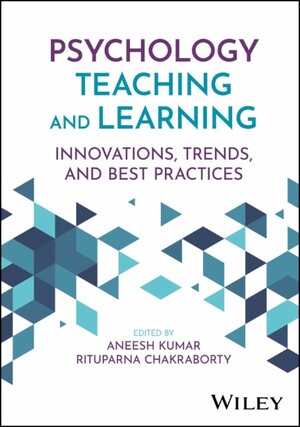
Innovative Capstone Assessment Models Beyond the Thesis in Master’s Psychology Programmes

Sahaya G. Selvam


Abstract

Master’s degree is a liminal stage at higher education between the bachelor’s and the doctoral degrees. The expected competency outcomes of a master’s degree presuppose a development on the foundations of the bachelor’s level while providing a basis for an original contribution at the PhD level with subject-specific abilities in integration of knowledge, its application, and communication of the same, coupled with a set of skills in self-learning.

A capstone experience that generally marks the conclusion to the coursework assesses these outcomes before a candidate is awarded a master’s degree. Does a thesis or dissertation consisting of empirical research alone assess the programme outcomes, as is the norm in many universities? Could there be an integration of capstone experiences and research with a variety of possibilities, taking into consideration the specificities […]
Continue reading


Well-being and religious commitment amongst South African and Kenyan students.

Fadiji, A.W., Khumalo, I., & Selvam, S.G. (2023). The well-being correlates of religious commitment amongst South African and Kenyan students. South African Journal of Psychology. https://doi.org/10.1177/00812463231199960
Religious commitment is a prominent feature in the lives of many students in Africa. The present study investigated the well-being correlates (emotional well-being, social contribution, and depression) of religious commitment, and compared them across sex. A cross-sectional sample of 471 students from South Africa and Kenya (men = 244; women = 227; with an average age of 22.8 years) completed the Religious Commitment Inventory, Patient Health Questionnaire, Social Well-being Scale, and Mental Health Continuum Short-Form. Structural equation modelling in Mplus was used to estimate direct effects of religious commitment on emotional well-being, social contribution and depression, and comparison across sex. The results showed significant direct effects, attesting to the association of […]

Continue reading


The Role of University President in Institutionalisation of Service Learning

The Role of University President in Institutionalisation of Service Learning in Higher Education

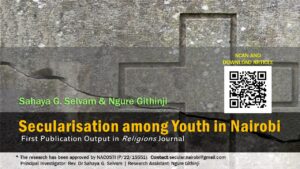
Citation: Selvam, S.G. (2023). The Role of University President in Institutionalisation of Service Learning in Higher Education. In Chantal J., et al. Institutionalization of Service-Learning in Higher Education, (pp.199-219). Buenos Aires: CLAYSS.
Abstract
Service Learning (SL) is understood as a reciprocal relationship between the learners and the beneficiaries of a social engagement initiative run by the learners, in which the learners are accompanied by the lecturer to integrate the encounter into their mainstream learning by means of systematic reflection. This method of teaching and learning is becoming a common phenomenon in institutions of higher education across the globe. In order to make it sustainable, the initiatives and processes around SL need to be institutionalised.  The aim of this book-chapter is to reflect on the role of the University President in […]

Continue reading


Book for Sale


Habits make us. Habits also break us.
This book is about habits. It is a guide to getting rid of habits that break you and building habits that make you.
Habits that build you up and others around you goes to form your Character Virtue. Character Strengths are said to contribute to individual and collective wellebing.
In effect, this is not a book. It is a manual for a Christian pilgrimage towards inner freedom and wellbeing. It provides guidelines daily, for forty days.
There is something wonderful that is going to happen to you at the end of this pilgrimage. You are likely to have a renewed vision, restored motivation, and revitalized energy.
Walk one day at a time. Walk to inner freedom. Walk to the embrace of God.
Buy Amazon Kindle: https://www.amazon.com/40-Day-Challenge-Breaking-Chains-Habit-ebook/dp/B0BWK5QZ3L/ref=sr_1_1?crid=2HGY2IYAYB9KH&keywords=sahaya+selvam&qid=1679044771&sprefix=sahaya+selvam%2Caps%2C368&sr=8-1
CLICK ON […]

Continue reading


Secularisation among Lapsed-Christian Youth in Nairobi

Secularisation and Spirituality among Lapsed-Christian Young Adults in Nairobi: An Exploratory Study of the Antecedents, Triggers, and Response

Abstract

African scholars have claimed that African peoples are “notoriously religious”. Is this still the case? Empirical literature on the subject is meagre. Therefore, the objective of this study was to examine the antecedents, triggers and response of secularisation and spirituality among lapsed-Christian young adults in Nairobi, Kenya, the participants were aged between 18 and 35, who were baptised but have abandoned Christian faith in favour of secularisation or non-affiliated spirituality. Qualitative data, from semi-structured in-depth interviews among the 14 participants, sampled through a snowball process, was recorded, transcribed verbatim, and analysed by the two authors. Eleven emerging themes were identified from 10 h of data. The first two […]

Continue reading